Human Resources documentation forms the operational backbone of any successful company. Properly maintained HR documents protect organizations legally, streamline onboarding, clarify workplace expectations, and foster transparency between employers and employees.
Whether you are scaling a startup or managing an established enterprise, maintaining a standardized HR documentation system is non-negotiable.
Why HR Documentation Matters
- Legal Compliance: Ensures compliance with national and regional labor laws, mitigating liability risks.
- Operational Clarity: Establishes clear standards for employee performance, behavior, and workflow processes.
- Conflict Resolution: Serves as objective evidence during grievances, workplace disputes, or performance reviews.
- Consistent Onboarding: Accelerates candidate integration by standardizing orientation and training materials.
Key Categories of HR Documentation
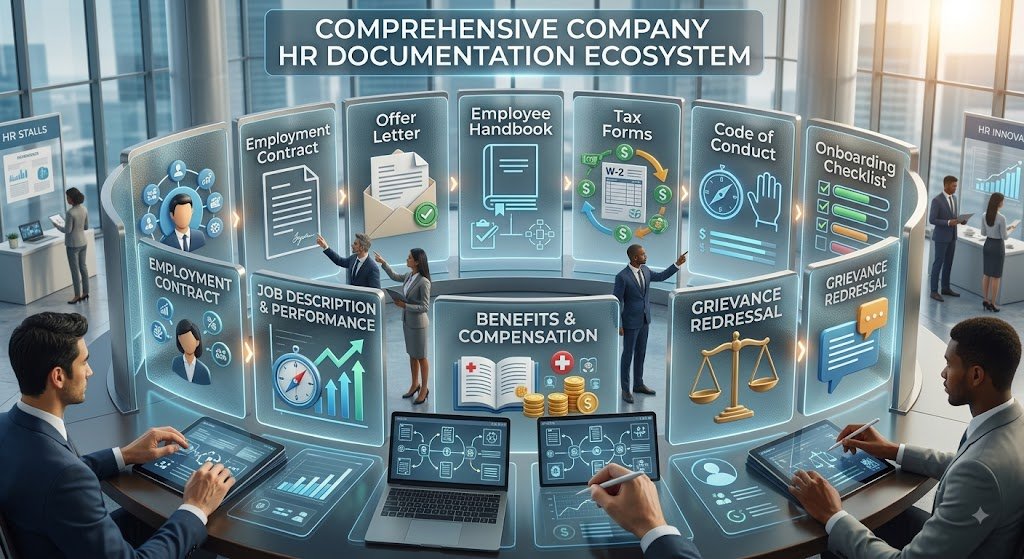
HR documentation spans every stage of the employee lifecycle. The core document types include:
| Lifecycle Stage | Essential Documents | Primary Purpose |
|---|
| 1. Recruitment & Hiring | Job Descriptions, Requisition Forms | Defines role scopes and hiring criteria clearly. |
| 2. Onboarding | Offer Letters, Employment Contracts, Tax Forms | Formally details employment terms, compensation, and legal setup. |
| 3. Policy & Governance | Employee Handbook, Code of Conduct, IT Usage Policy | Outlines company rules, culture, benefits, and workplace standards. |
| 4. Performance & Growth | Appraisal Forms, Training Records, KPIs | Tracks professional development and performance benchmarks. |
| 5. Offboarding & Exit | Resignation Letters, Exit Checklists, Relieving Letters | Manages smooth separations, asset recovery, and final settlements. |
1. Onboarding & Pre-Employment Documents
Every new hire must complete standard documentation before their official start date to establish a lawful employment relationship:
- Offer Letter: Outlines the initial job title, starting salary, joining date, and basic working conditions.
- Employment Contract: A legally binding document covering detailed terms, duties, probation periods, non-disclosure agreements (NDAs), and termination clauses.
- Identity & Background Verification: Collects official government IDs, educational certificates, past employment proof, and tax identification details.
2. Workplace Policies & The Employee Handbook
An updated Employee Handbook is the most crucial document for setting organizational culture and behavioral guidelines.
Essential Handbook Policies:
- Code of Conduct: Expected professional behavior, anti-harassment standards, and ethics guidelines.
- Attendance & Leave Policy: Rules covering working hours, sick leave, paid time off (PTO), and remote work protocols.
- Compensation & Benefits: Details on pay cycles, overtime rules, health insurance, and bonuses.
- Data Protection & Security: Rules regarding confidentiality, internal software access, and proper use of company assets.
3. Performance & Employee Record Maintenance
Documenting employee performance consistently creates a fair environment and protects against wrongful termination claims.
- Performance Improvement Plans (PIPs): Structured plans outlining actionable goals, timelines, and support for underperforming staff.
- Incident & Disciplinary Records: Written accounts of policy violations, formal warnings, or workplace grievances.
- Training & Certification Logs: Official logs verifying that employees completed mandatory training (e.g., safety, compliance, tool certifications).
Best Practices for HR Document Management
- Go Digital (HRIS): Use cloud-based Human Resource Information Systems to centralize, secure, and easily audit digital records.
- Maintain Strict Confidentiality: Restrict sensitive personnel files—such as medical notes, salary details, and personal IDs—to authorized personnel only.
- Regular Audits: Review and update policies annually to remain aligned with evolving labor legislation.
- Standardize Templates: Use consistent, professional document templates across the company for all official communications.
Essential HR Documentation Checklist
- Standardized job descriptions updated for all active roles.
- Legally vetted employment contract templates ready.
- Comprehensive Employee Handbook updated for the current year.
- Secure onboarding workflow established for ID and tax collection.
- Standardized exit checklists and clearance forms created.