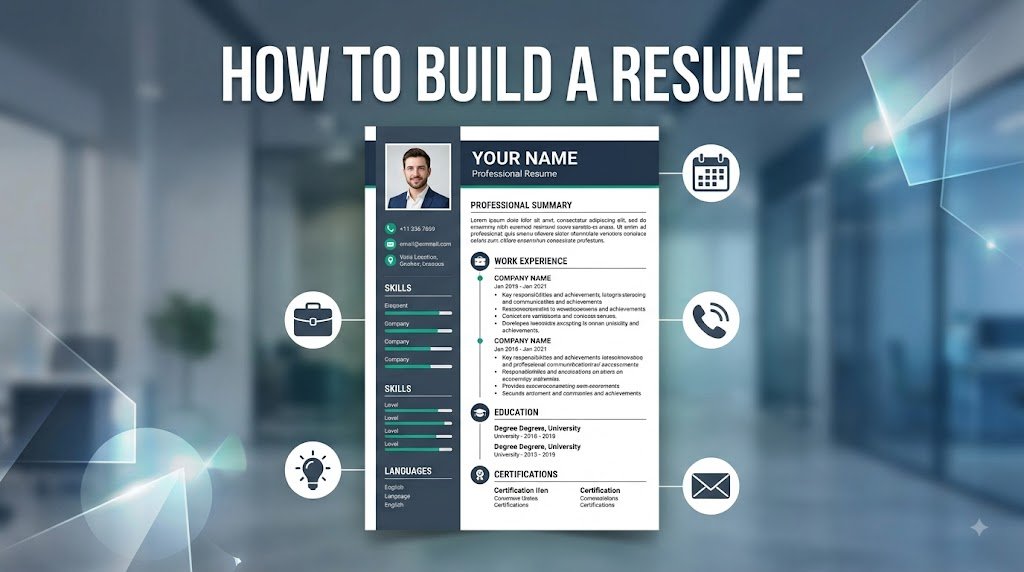
In today’s fast-paced job market, your resume is often your first and only chance to make a lasting impression on a recruiter. Whether you are a fresh graduate entering the workforce or an experienced professional looking to take the next step in your career, knowing how to build a resume that stands out is crucial.
With companies using Applicant Tracking Systems (ATS) to screen candidates automatically, crafting an optimized, visually appealing, and impact-driven resume is no longer optional—it is essential.
This step-by-step guide will walk you through building a professional resume that gets noticed, beats the ATS, and secures your dream job interview.
1. Choose the Right Resume Format
Before writing a single word, you need to decide on the structural layout of your document. Depending on your career history, choose one of these three standard formats:
- Reverse-Chronological (Most Recommended): Focuses on your work experience, starting with your most recent job. It is favored by 90% of hiring managers and ATS filters.
- Functional (Skills-Based): Emphasizes your skills and abilities rather than where or when you worked. Best for career changers or those with employment gaps.
- Combination (Hybrid): Balances detailed skill sets with a sequential work history. Ideal for senior roles or specialized professionals.
2. Include Essential Contact Information
Your contact section should be clear, concise, and placed right at the top of your resume. Avoid adding unnecessary details like age, marital status, or full street address.
What to Include:
- Full Name: Bold, clean, and easily legible font (e.g., 18–24pt).
- Professional Job Title: Aligned with the position you are applying for.
- Phone Number: A direct personal line.
- Professional Email Address: Format as firstname.lastname@email.com.
- Location: City and Country/State (e.g., Rajkot, Gujarat).
- LinkedIn Profile: Ensure your profile URL is customized and updated.
Pro Tip: If applicable to your field, include links to a portfolio, GitHub, or personal professional website.
3. Write a Compelling Resume Summary or Objective
Your summary is a 2–3 sentence elevator pitch that highlights your top qualifications and career achievements.
- Use a Resume Summary if: You have more than 2 years of professional experience.
Example: "Data-driven Marketing Specialist with 5+ years of experience managing multi-channel campaigns. Proven track record of boosting organic traffic by 40% through targeted SEO strategies."
- Use a Resume Objective if: You are an entry-level candidate, student, or changing careers.
Example: "Detail-oriented Business Graduate seeking to leverage analytical and project management skills to contribute to digital transformation initiatives at XYZ Company."
4. Highlight Relevant Work Experience
This is the core of your resume. Rather than listing daily duties, focus on measurable accomplishments and impact.
Structure for Work Experience:
- Job Title | Company Name | Dates Employed (Month, Year)
- Use 3 to 5 bullet points starting with strong action verbs (e.g., Architected, Managed, Optimized, Led).
- Quantify your achievements using numbers, percentages, or metrics.
Example:
- Optimized internal workflows, reducing team project completion time by 25%.
- Led a team of 6 engineers to deliver a SaaS platform on time and under budget.
- Generated over $50,000 in new revenue through cross-selling strategies.
5. Showcase Key Hard and Soft Skills
Recruiters spend less than 10 seconds scanning a resume for relevant keywords. Group your skills strategically so they are easy to read.
| Technical / Hard Skills | Soft / Interpersonal Skills |
|---|
| SEO & Content Strategy | Problem-Solving & Critical Thinking |
| Data Analysis (Python, SQL) | Cross-Functional Team Leadership |
| Project Management (Jira, Agile) | Time Management & Organization |
| Graphic Design (Figma, Illustrator) | Strategic Communication |
6. List Your Education and Credentials
Keep your education section clean and structured. If you have years of work experience, place this section toward the bottom of your resume. If you are a student, move it above your work experience.
- Degree & Major: e.g., Bachelor of Science in Computer Engineering
- University/Institution Name: e.g., Gujarat Technological University
- Graduation Year: (Optional if graduated long ago)
- Certifications & Training: List relevant professional certifications (e.g., PMP, Google Analytics, AWS Certified).
7. Optimize for Applicant Tracking Systems (ATS)
An ATS scans your resume for keywords before a human ever sees it. To pass through smoothly:
- Use Job Description Keywords: Align your skill set with the exact terminology used in the job posting.
- Stick to Clean Layouts: Avoid complex graphics, tables, or charts inside text sections, as ATS parsers can misread them.
- Use Standard Section Titles: Stick to standard headers like "Work Experience," "Education," and "Skills."
- Save as PDF or DOCX: Unless specified otherwise, save as a PDF to preserve your formatting.
Quick Resume Checklist
Before submitting your job application, make sure to double-check these items:
- Is your resume 1 to 2 pages maximum?
- Have you thoroughly proofread for spelling and grammar errors?
- Is your font professional and consistent (e.g., Arial, Calibri, or Inter at 10–12pt)?
- Are all bullet points focused on results and accomplishments?
- Is your contact info accurate and clickable?
Conclusion
Learning how to build a resume effectively is an investment in your career trajectory. By tailoring your content to job descriptions, using metrics to demonstrate impact, and keeping the design clean and readable, you position yourself as a top-tier candidate for any hiring team.